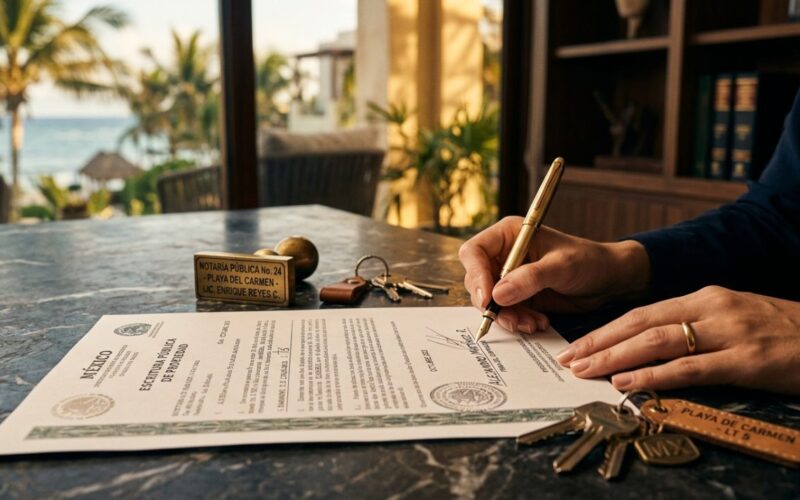
You signed, you paid, and the property never arrives, or the seller simply stopped honoring what was promised. It’s one of the most distressing situations in real estate, and I completely understand the frustration it causes. The good news is that you have real, concrete legal options. Here I’ll explain what to do when a developer or seller breaches a purchase agreement.
What counts as a breach
A breach occurs when one party fails to fulfill what was agreed in the contract: the developer doesn’t deliver on time, the property lacks the promised features, or the seller refuses to transfer the deed despite having received payment. In the Riviera Maya, with so many pre-construction developments, delivery delays are one of the problems I see most, and there’s almost always a legal path forward.
“A contract isn’t just a piece of paper: it’s a promise the law can compel someone to keep.”
Your legal options
When someone breaches, you’re not required to sit on your hands. Depending on your case, you can:
- Demand performance of the contract: through a specific-performance lawsuit to compel the other party to deliver or transfer the deed as agreed.
- Claim contractual penalties: the penalties the contract itself sets out for breach.
- Recover damages: what the breach actually cost you.
- Rescind the contract: end the relationship and recover your money, when that’s the best route.
The evidence you’ll need
The success of a claim depends on the evidence, and here every document counts. It’s essential to keep:
- The signed contract and all its annexes.
- Proof of payment: transfers, receipts, bank statements.
- Communications: emails, messages, and any written promise about timelines or features.
- Development documentation: marketing materials, plans, and committed dates.
How to proceed step by step
First, don’t sign anything new or accept verbal agreements under pressure. Then gather your documentation and seek advice before time works against you. I review your contract, pinpoint exactly which clause was breached, and tell you honestly which route suits you best: often a well-framed negotiation resolves the matter without litigation, and when we do have to litigate, we do it with the evidence in order.
Why acting in time matters
In these cases, timing matters. There are legal deadlines to file a claim, and the longer you wait, the harder it becomes to recover your money or your property. If something feels wrong about your purchase, don’t wait for the problem to grow. A timely consultation can be the difference between losing your investment and recovering what is rightfully yours.
This article is informational and does not constitute legal advice. Each case requires individual assessment.