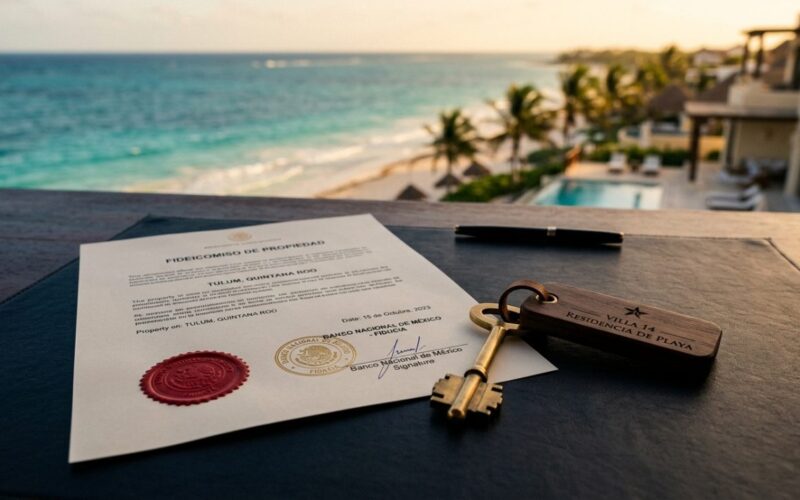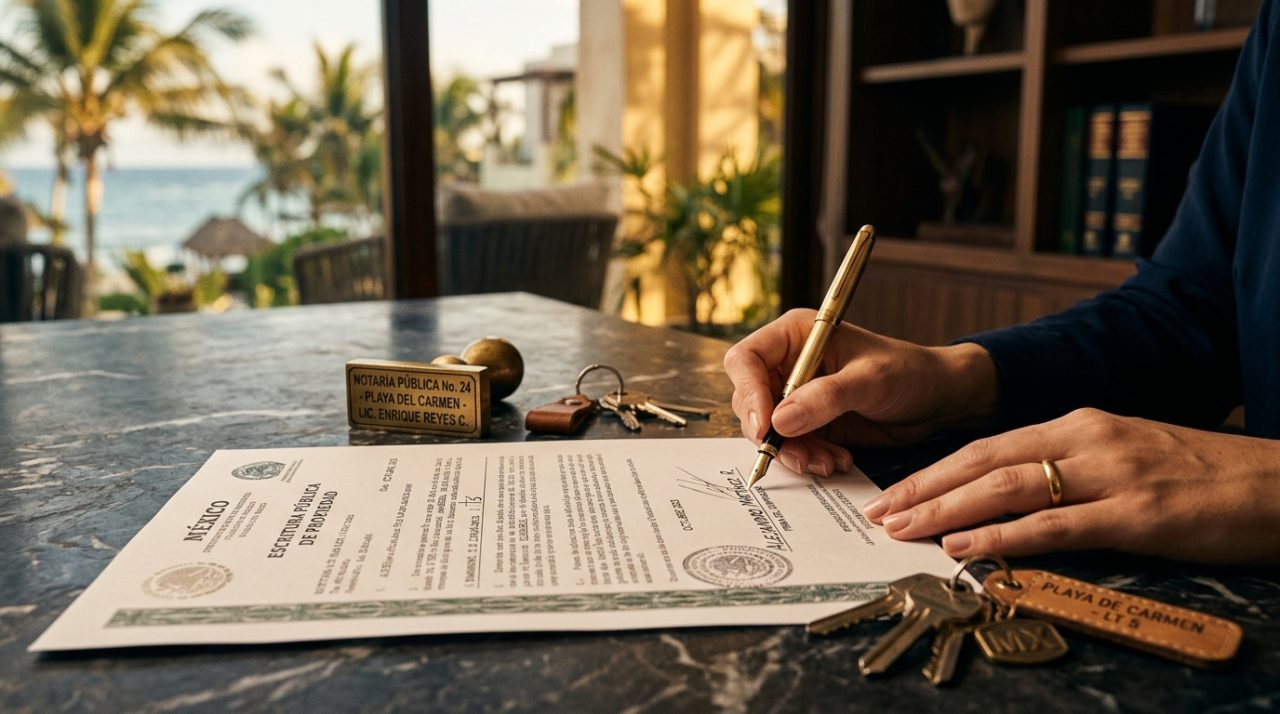
The deed is the document that legally makes you the owner, and the process to obtain it involves steps and costs worth knowing from the start. Many people reach signing day without knowing what they’ll really pay, and that’s where the surprises show up. Here I’ll walk you through, clearly, how closing works in Playa del Carmen and which costs to budget for.
What deed registration means
Closing means formalizing your purchase before a notary and registering it in your name at the Public Property Registry. Until the deed is signed and recorded, the property legally isn’t yours yet, no matter how much you’ve already paid. That’s why this step is the heart of every real estate purchase.
The steps of the process
The path is simpler than it looks when someone guides you through it:
- Choosing a notary: in Mexico the notary is a public officer who certifies the transaction and drafts the deed.
- Review and due diligence: confirming the property is free of liens and debts.
- Appraisal: establishing the property’s official value for tax purposes.
- Tax and fee calculation: preparing a breakdown of everything due.
- Signing the deed: buyer and seller sign before the notary.
- Recording at the Public Registry: the final step that makes you the official owner.
“You’re not the owner when you pay, you’re the owner when your deed is recorded in your name.”
Costs to budget for
These are the typical costs added on top of the property price. They aren’t optional, so it pays to understand them upfront:
- Notary fees: for drafting and certifying the deed.
- Real Estate Acquisition Tax (ISAI): the state acquisition tax paid by the buyer, calculated on the transaction value.
- Registry fees: the cost of recording the property in your name.
- Appraisal: performed by an authorized appraiser.
- Certificates: lien-free status, property-tax clearance, and others.
Timelines and documents
A well-managed closing usually takes four to eight weeks, depending on complexity and whether a trust is involved. To move forward smoothly you’ll need official ID, proof of address, your tax identification, and the property’s documentation. If you’re a foreign buyer, there are additional requirements that I coordinate for you, so you never have to chase paperwork yourself.
My recommendation
The most expensive mistake in a closing is improvising. When someone reviews every document, calculates taxes ahead of time, and coordinates notary, appraisal, and registry, you reach signing day knowing exactly what you’re signing and what you’re paying. That certainty is precisely what I aim to give you: a purchase with no fine print and no last-minute scares.
This article is informational and does not constitute legal advice. Each case requires individual assessment.